
If you’ve started exploring Chinese herbal tea, you’ve probably noticed two different preparation methods listed on different herbs: infusion and decoction. They’re not interchangeable, using the wrong method can leave a tea weak and flavorless, or waste a delicate herb’s properties. Here’s exactly what each one means and how to tell which one your herb needs.
Whether for an infusion or a decoction
- Use a pot made of stainless steel, ceramic, clay, or glass. Do not use aluminum, tin, or iron cookware.
- Ideally, use filtered tap water or bottled spring water.
What Is an Infusion?
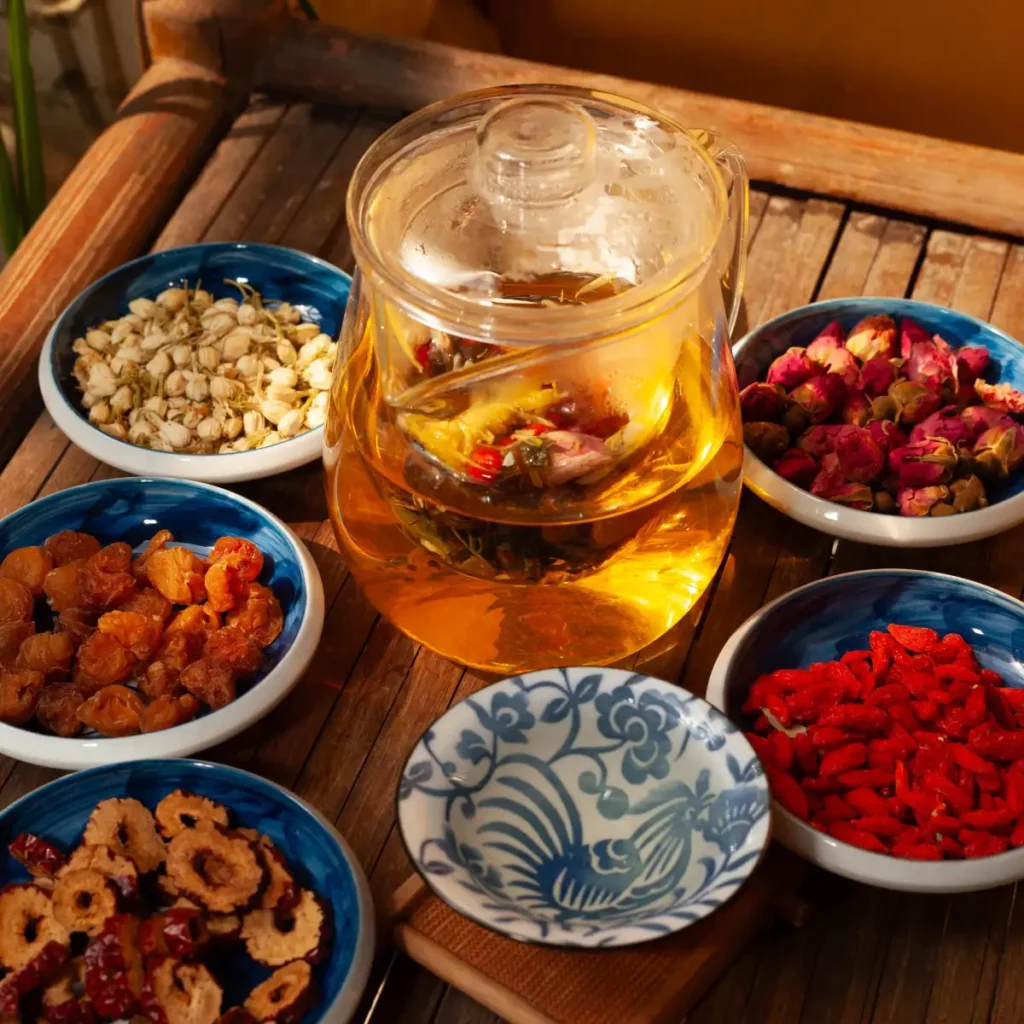
An infusion is the same basic method used to brew regular tea: pour hot water over the herb and let it steep. It’s the right method for delicate plant parts whose beneficial compounds release quickly and can be damaged by prolonged boiling — think flowers, leaves, and other soft, thin materials.
- Best for: flowers, leaves, thin stems (chrysanthemum, mint, mulberry leaf, honeysuckle)
- Water temperature: just off the boil, around 195–205°F
- Steep time: 5 to 10 minutes, covered
What Is a Decoction?
A decoction is a longer, more active process: the herb is simmered in water, sometimes for 20 minutes or more, to draw out compounds locked inside tougher plant material. This method is reserved for hard, dense ingredients that a quick steep simply can’t extract enough from.
The traditional decoction method is as follows:
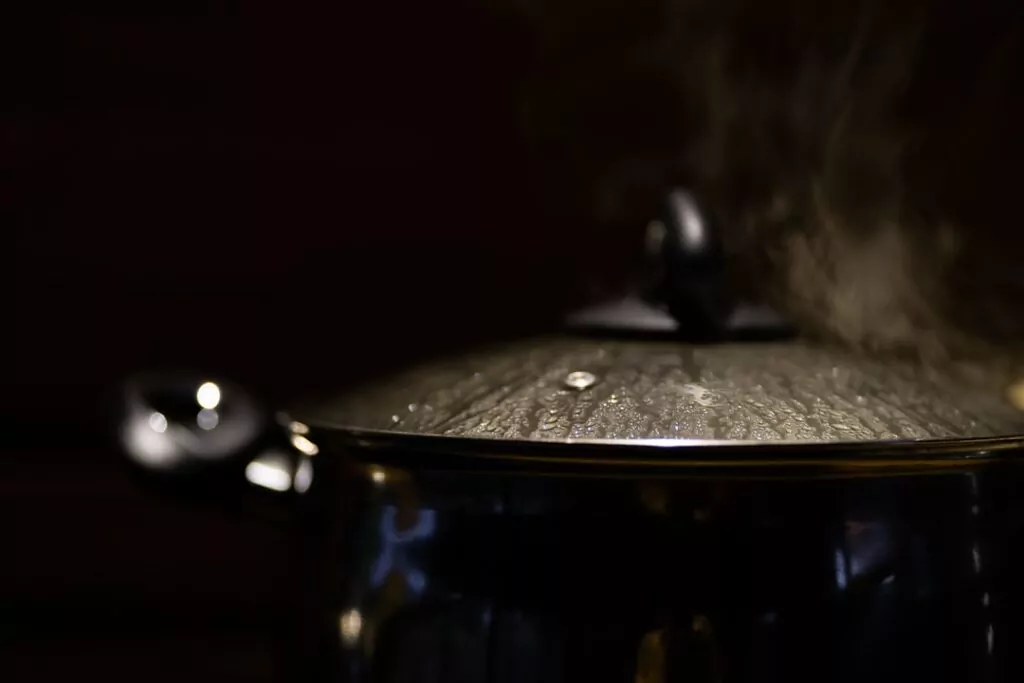
Heat the water over the burner until it comes to a strong boil. Once boiling, lower the flame to maintain a gentle simmer and place the lid on loosely so the steam can vent.
- Best for: roots, bark, seeds, (astragalus root, licorice root, hawthorn, goji berries)
- Water temperature: starts cold, brought to a gentle simmer
- Simmer time: 20 to 45 minutes, partially covered
Note: dried berries like hawthorn or goji berries can be prepared in infusion or decoction (their extraction and taste will be stronger).
What Is a Decoction?
| Infusion | Decoction | |
|---|---|---|
| Herb type | Flowers, leaves, thin stems, berries | Roots, bark, seeds, berries |
| Water | Poured hot over herbs | Starts cold, brought to a simmer |
| Time | 5–10 minutes, steeped | 20–45 minutes, simmered |
| Goal | Gentle, quick extraction | Deep, thorough extraction |
What About Blends With Both?
Many traditional formulas combine roots and flowers in a single blend. In that case, the roots are typically decocted first, and the more delicate flowers or leaves are added toward the very end of the simmer, just long enough to infuse without breaking down. Always check the preparation notes on your specific blend, since traditional formulas can vary.
At Herbs Yin Yang, we make sure to group together herbs for decoctions and herbs for infusions. This is to make preparation easier for our customers.
These statements are based on traditional use and have not been evaluated by the FDA. Chinese herbal tea is not intended to diagnose, treat, cure, or prevent any disease. Talk to your healthcare provider before trying a new herb, especially if you are pregnant, nursing, or taking medication.
Common Questions
Can I use a teapot or infuser for a decoction?
Not really. A decoction needs active simmering on the stovetop in a small pot, since steeping alone won’t extract enough from roots or bark. A teapot or infuser is perfect for infusions, but save the stovetop for decoctions.
What happens if I decoct a delicate flower by mistake?
Simmering a delicate flower or leaf for too long can break down its flavor and aroma, leaving the tea dull or bitter. It won’t be harmful, just less pleasant So it’s worth using the right method for the right herb.
Is one method “stronger” than the other?
Just different. Each method is matched to the plant material it works best with, so neither one is universally more potent. Using the correct method simply gets the most out of each herb.
However, in term of taste, decoctions are generaly more bitter and stronger.
Not sure where to start?
Read our introduction to Chinese herbal tea or jump straight to our beginner’s guide for a full walkthrough.