
If you’ve ever wondered what Chinese herbal tea actually is, you’re not alone. Unlike the green, black, or oolong teas that come from the Camellia sinensis plant, Chinese herbal tea is a broad category of caffeine-free infusions and decoctions made from dried flowers, roots, seeds, and leaves, each chosen for a specific role in traditional Chinese wellness practices.
A Tradition Rooted in Thousands of Years of History
Herbal drinking traditions in China date back thousands of years, closely tied to Traditional Chinese Medicine (TCM). Long before tea bags and supplements, families dried herbs, flowers, and roots from their gardens and prepared them at home to support everyday balance, a cup for a restless night, a blend for a change of season, a brew passed down from a grandmother’s recipe. That same philosophy of using nature’s ingredients thoughtfully is what still guides how Chinese herbal tea is made today.
How Is It Different From Regular Tea?
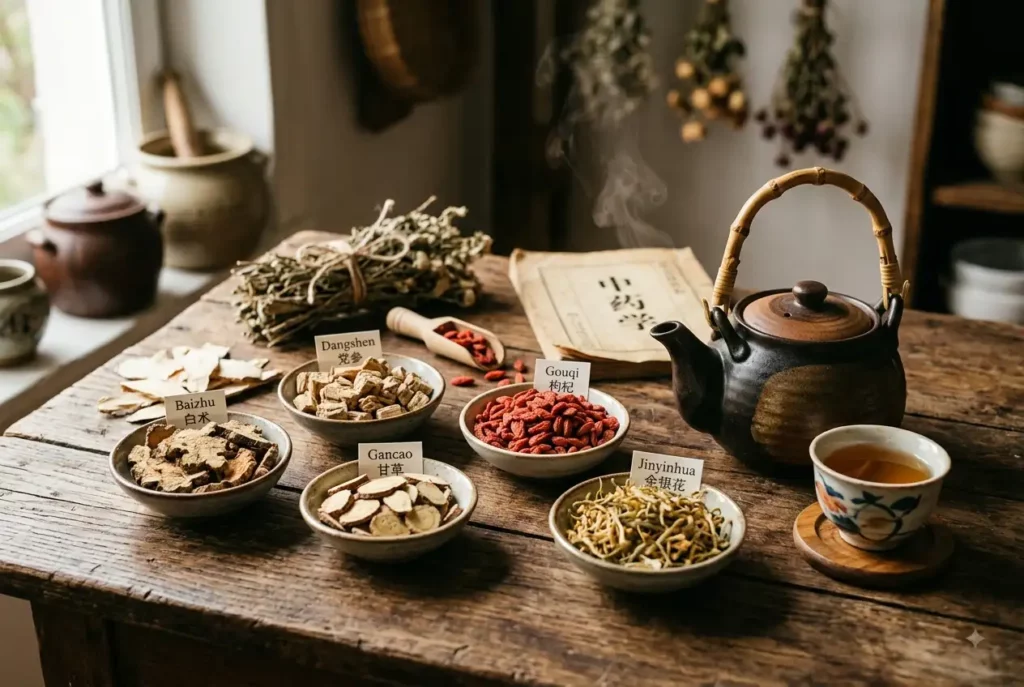
“Tea” technically refers only to drinks made from the tea plant. Chinese herbal tea, sometimes called a tisane, contains no tea leaves at all — and no caffeine. Instead, each blend is built from one or more dried botanicals, such as:
- Flowers — chrysanthemum, honeysuckle, rose
- Roots — licorice root, astragalus, ginseng
- Fruits & seeds — goji berry, hawthorn, jujube date
- Leaves — mulberry leaf, lotus leaf
Depending on the herb, the blend is prepared either as a quick infusion (steeped like tea) or a longer decoction (gently simmered). If you’re not sure which method applies to your blend, our guide on infusion vs. decoction breaks it down step by step.
Why People Reach for Chinese Herbal Tea
Every herb in Chinese herbal medicine is traditionally associated with a particular role: warming, cooling, calming, invigorating… People choose blends based on how they want to feel: a soothing evening cup, a bright pick-me-up, or a warming brew for the colder months. Because there’s no caffeine involved, herbal tea is often enjoyed any time of day, including right before bed.
These statements are based on traditional use and have not been evaluated by the FDA. Chinese herbal tea is not intended to diagnose, treat, cure, or prevent any disease. Talk to your healthcare provider before trying a new herb, especially if you are pregnant, nursing, or taking medication.
How to Choose Your First Blend
New to herbal tea? Start simple. Pick one blend that matches how you want to feel, relaxed, energized, or balanced, and follow the brewing method listed on the herb’s description. If you’d like a full walkthrough before you start, our beginner’s guide to Chinese herbal tea covers everything from water quality to your first cup.
Ready to find your blend?