
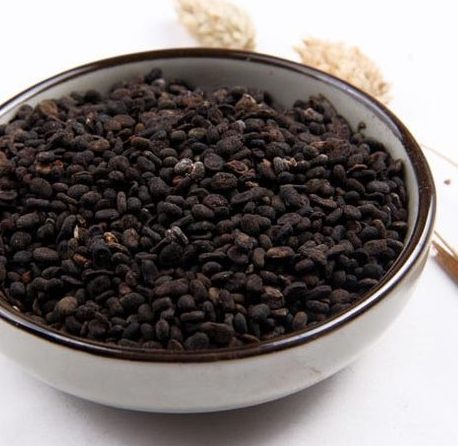
Indications for the fruit of Psoralea corylifolia L.
On the urogenital sphere :
- enuresis
- polyuria
- nocturia
- urinary incontinence
- sensation of cold in the uterus
- infertility
- premature ejaculation
- impotence
- sperm count
In the lower back :
- lower back pain with cold sensation
- eakness in lower back and knees
- pain and cold sensation in knees and lumbar region
On the digestive system :
- diarrhea
- borborygma
- abdominal pain
*In Chinese medicine, the fruit of Psoralea corylifolia L. is ideal for diarrhea caused by spleen and kidney deficiency.
Effects on bleeding :
- hemophilia
- epistaxis
- bleeding gums
- uterine bleeding
- bleeding after abortion
- bleeding caused by the contraceptive pill or the intrauterine device (IUD), formerly known as the coil
- reduces the amount of blood in heavy menstrual periods
For skin diseases applied externally:
- vitiligo
- psoriasis
- vulgar and plantar wart
- calluses and corns
In addition to these traditional applications, scientific research recommends the fruit of Psoralea corylifolia L. for its effects:
- anti-tumor
- anti-rheumatoid arthritis
- coronarodilator
- anti-aging
- corrects low levels of adrenocortical hormones and increases white blood cell count
- relaxes smooth muscles
Instructions for use and dosage
Decoction:
Rinse herbs in cold water, place 6g to 10g of Psoralea corylifolia L. fruit in a glass, stainless steel, Pyrex or terracotta container. Pour in 300ml spring water or filtered water. Heat over high heat until it comes to the boil, then turn down to a simmer for 20 minutes.
Drink this decoction in the morning and evening, using the same fruit.
The 6g can also be prepared in rice porridge.
For skin diseases, the fruit is mainly prepared in alcohol.
Contraindication:
Psoralea corylifolia L. fruit is contraindicated for people with any of the following symptoms:
- Night sweats
- Red cheekbones
- Hot flushes
- Dry mouth and throat both day and night
- Constipation
Traditional sources specify that this fruit should not be mixed with tea.
Pregnant women should consult a practitioner of Chinese medicine familiar with Chinese pharmacopoeia before consuming it.
A word from David Brun
(Graduate of the Nanjing University of Traditional Chinese Medicine)
The name Bu Gu Zhi (补骨脂), i.e. the fruit of Psoralea corylifolia L., suggests that the function of this herb is to provide rich bone-repairing substances. Indeed, its action on the kidneys helps strengthen the body’s bones (the kidneys control the bones in Chinese medicine).


Reviews
There are no reviews yet.