
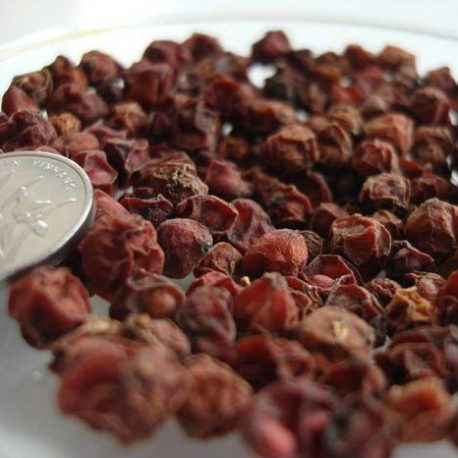
Indication of schisandra chinensis fruit in Chinese medicine
- Chronic dry cough
- Coughing with wheezing
- Stops spontaneous sweating accompanied by dry throat or thirst
- Stops thirst
- Helps fight insomnia
- Relieves palpitations
- Helps with spermatorrhea, enuresis, frequent urination and leucorrhea
- Improves liver function in chronic hepatitis
- Lowers liver enzymes ALT and AST
- Stimulates the central nervous system
Instructions for use and dosage
Place 5g of dried Schizandra Fruits in a glass, stainless steel, Pyrex or terracotta container. Pour in 300ml of spring or filtered water. Heat over high heat until boiling, then simmer for 20 minutes.
Drink the liquid, but don’t discard the herbs as they will be reused for the evening decoction. Drink this decoction in the morning and in the evening, using the same herbs.
Combinations:
Schizandra fruit can be combined with astragalus root for spontaneous sweating with cold body and limbs, pale complexion, lack of appetite, abdominal distension, loose stools and a preference for hot drinks.
Contraindication:
This fruit should not be consumed during :
- Colds, flu or heat stroke
- Feelings of extreme heat in the body
- Untreated skin rashes
- Gastritis
- Ulcers
- Epilepsy
A word from David Brun
(Graduate of the Nanjing University of Traditional Chinese Medicine)
The Chinese name for Schizander Fruit is Wu Wei Zi (五味子) which can be translated as “5-flavored seed”. This name was given to it because it contains the 5 main flavors of Chinese medicine: sweet, sour, bitter, pungent and salty.
In fact, the skin of the fruit is sweet, the flesh is sour, the seeds are bitter and pungent, while the whole fruit is salty.


Reviews
There are no reviews yet.